
Floors and tiling
A well-laid floor is judged on your knees: grout lines in line, no lip under your hand, skirting sitting flush and clean cuts against the door frames. But the real work is underneath, in a substrate that is flat and dry.
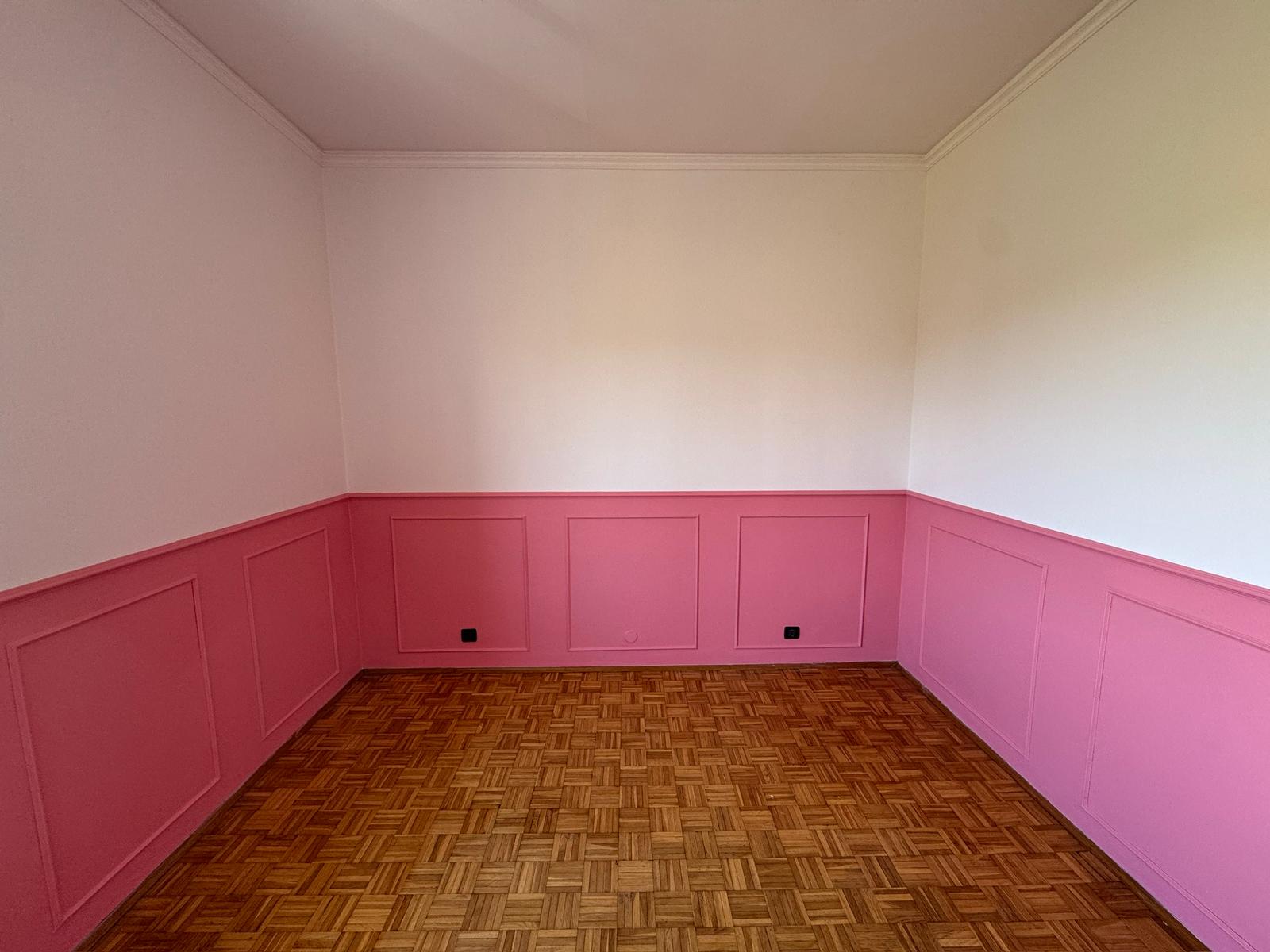
We lay porcelain, parquet and resin on new and existing floors, and where the timber allows we sand and refinish old parquet rather than rip it out.
The surfaces we work on
Porcelain and ceramic
Large formats, wood and stone effect, straight or staggered, including narrow joints with levelling clips.
Parquet
Engineered or solid, glued or floating, laid straight, in herringbone or in chevron.
Restoring existing parquet
Sanding, filling the gaps and a new lacquer or oil finish.
Resin and seamless floors
For lofts, shops and plant rooms, where you want a joint-free surface that is easy to clean.
Bathroom and kitchen tiling
Shower walls, splashbacks and recesses, tanked beforehand where it is needed.
Skirting and thresholds
Flush skirting, timber or painted, and stone or porcelain thresholds at doorways.
A floor is decided in the substrate
Laying is the quick part. Whether it lasts is settled by the three stages before it.
Checking the substrate
We check flatness with a straight edge, the soundness of the screed and residual moisture with a meter. A screed still damp under glued parquet means cupping within the year: if the readings aren’t there, we wait or change the specification.
Preparation
Lifting the old floor where necessary, vacuuming, priming and a self-levelling compound to take out any dips. On timber floors or doubtful substrates we look at a dedicated base layer.
Laying
Adhesive combed with the right notch, back-buttering on large formats, tapping down and constant checks on level and alignment. Slabs are wet cut so the edges don’t chip.
Grouting and sealing
Grouting once the adhesive has gone off, sponging clean, and flexible sealant at perimeters and material changes, where the floor has to be able to move.
Finishing and handover
Skirting, thresholds, trims and a final clean with a product suited to what has been laid. On parquet we leave the maintenance instructions, which are not a detail.
Materials and tolerances
Guide prices for laying
Guide figures, excluding VAT, for work carried out in normal site conditions. The final price comes out of the site visit: it depends on access, the state of the substrate and the quantities.
Questions about floors and laying
Can the new floor go over the old one?
Often yes, and it saves the cost of lifting and disposal. Two things have to hold: the old floor must be firmly stuck down, with no tiles sounding hollow, and the extra 10-12 mm must not cause trouble at doors and thresholds. We check that at the site visit by tapping the surface.
Does my worn parquet have to go?
Not necessarily. If the wear layer is thick enough, sanding and refinishing brings it back to new for a fraction of the cost of replacing it. If boards have lifted or water has stained through the timber, replacing is the better call.
How long before I can walk on it?
On porcelain with cementitious adhesive, usually 24-48 hours for light foot traffic and a few days before the furniture goes back. On glued parquet, better to allow 48-72 hours, and with lacquered finishes follow the manufacturer’s times before putting rugs down.
Send us a photo of the floor
Two photos and the room dimensions are enough for a first idea of the cost; we confirm it at the site visit.
Book the site visit